
Why Do You Keep Biting Your Cheek or Tongue? Causes, Treatment, and Prevention

Everyone catches the inside of the cheek occasionally. A rushed meal, talking while chewing, an unexpectedly hard piece of food — the teeth close before the tongue or cheek has moved clear. That is usually an accident.
The situation changes when the same area gets bitten repeatedly.
Patients often describe a familiar sequence: the cheek is caught during a meal, it swells slightly, then the swollen tissue becomes easier to catch again. Within a few days there may be a tender ulcer or a rough white patch exactly along the line where the upper and lower teeth meet. Repeated mechanical trauma from biting or friction is a recognised cause of chronic traumatic oral ulcers.
The location gives useful clues. Biting towards the back of the cheek makes me look closely at molar position, wisdom teeth and the contour of fillings or crowns. Repeated injury to the side of the tongue raises slightly different questions: Is a tooth tilted towards the tongue? Is there a fractured edge? Has the bite changed after losing a tooth? Does the tongue have enough space when the jaws close?
Sometimes the tissue is not the starting problem at all. It is simply getting trapped because the teeth are meeting in the wrong place.
That is when Bite Correction Treatment in Kothamangalam becomes more relevant than repeatedly applying ulcer gel and waiting for the sore area to settle.
A traumatic ulcer usually improves once the source of injury disappears. An ulcer that continues for more than three weeks, changes in appearance, bleeds without an obvious reason or is associated with a persistent lump deserves examination rather than continued self-treatment. NHS guidance also recommends assessment of oral ulcers persisting beyond three weeks.
The Bite Itself Is Often the Problem
A dental bite is not simply whether the front teeth look straight.
What matters is how the upper and lower teeth come together during chewing, swallowing and sideways jaw movements. A person can have reasonably attractive front teeth yet still have posterior teeth meeting in a way that repeatedly catches the cheek.
Crowding is a common example. A molar that sits slightly towards the cheek may narrow the safe space available to the soft tissue. A tooth tilted towards the tongue can create the same problem on the lingual side. Crossbites, rotations, severe crowding and certain deep-bite relationships can alter the path along which the jaws close.
Then there are cases where the bite has been changing slowly for years.
A missing lower molar may allow the opposing upper tooth to move further down. Nearby teeth can tilt into the gap. Chewing shifts towards the other side. The patient adapts without noticing it — until the tongue starts getting caught or one cheek develops a repeated sore spot.
That is why looking only at the ulcer is rarely enough.
Assessment for Bite Correction Treatment in Kothamangalam may include checking the relationship of the upper and lower arches, individual tooth positions, areas of crowding, jaw movements and the exact contacts occurring when the patient closes and chews. Articulating paper, photographs, digital scans and radiographs may be used where clinically indicated.
The treatment decision should come after that assessment, not before it.
I would be cautious with anyone who assumes that every cheek-biting problem needs orthodontics. Some do. Some need nothing more than correction of one badly shaped restoration. Others are primarily habitual rather than structural.
Getting that distinction right saves months of unnecessary treatment.
Patients occasionally search broadly for a dentist in kochi because the problem feels complicated, yet repeated cheek or tongue biting can often be investigated locally through a careful occlusal examination.
Teeth, Restorations, Wisdom Teeth and Missing Spaces
A sharp tooth is easy to blame because patients can often feel it with the tongue. The less obvious offenders are sometimes more important.
Consider a filling that has been placed slightly too wide towards the cheek. It may be technically intact, painless and free of decay. Yet its contour can repeatedly push cheek tissue towards the opposing tooth during chewing. A crown can cause the same difficulty if its shape or contact pattern does not reproduce the original tooth closely enough.
Small discrepancies matter in the mouth.
A fractured cusp is another culprit. So is a heavily worn tooth that has developed a sharp enamel edge. Occasionally only a minor adjustment is required. That does not mean casually grinding down every tooth near the ulcer. Enamel removal should be conservative and justified by the actual contact causing injury.
Wisdom teeth deserve special attention because they are commonly blamed for anything occurring at the back of the mouth. They can cause cheek biting, particularly when a partially erupted or cheek-positioned third molar repeatedly catches the mucosa. Extraction is not automatically the answer. Position, eruption status, available space, decay, gum condition and contact with the cheek all influence that decision.
Missing teeth produce a different mechanical problem. The mouth does not remain static after a tooth is removed. Adjacent teeth may drift or tip. Opposing teeth may move into the empty space. Chewing patterns change. A bite that once worked reasonably well can gradually become less stable.
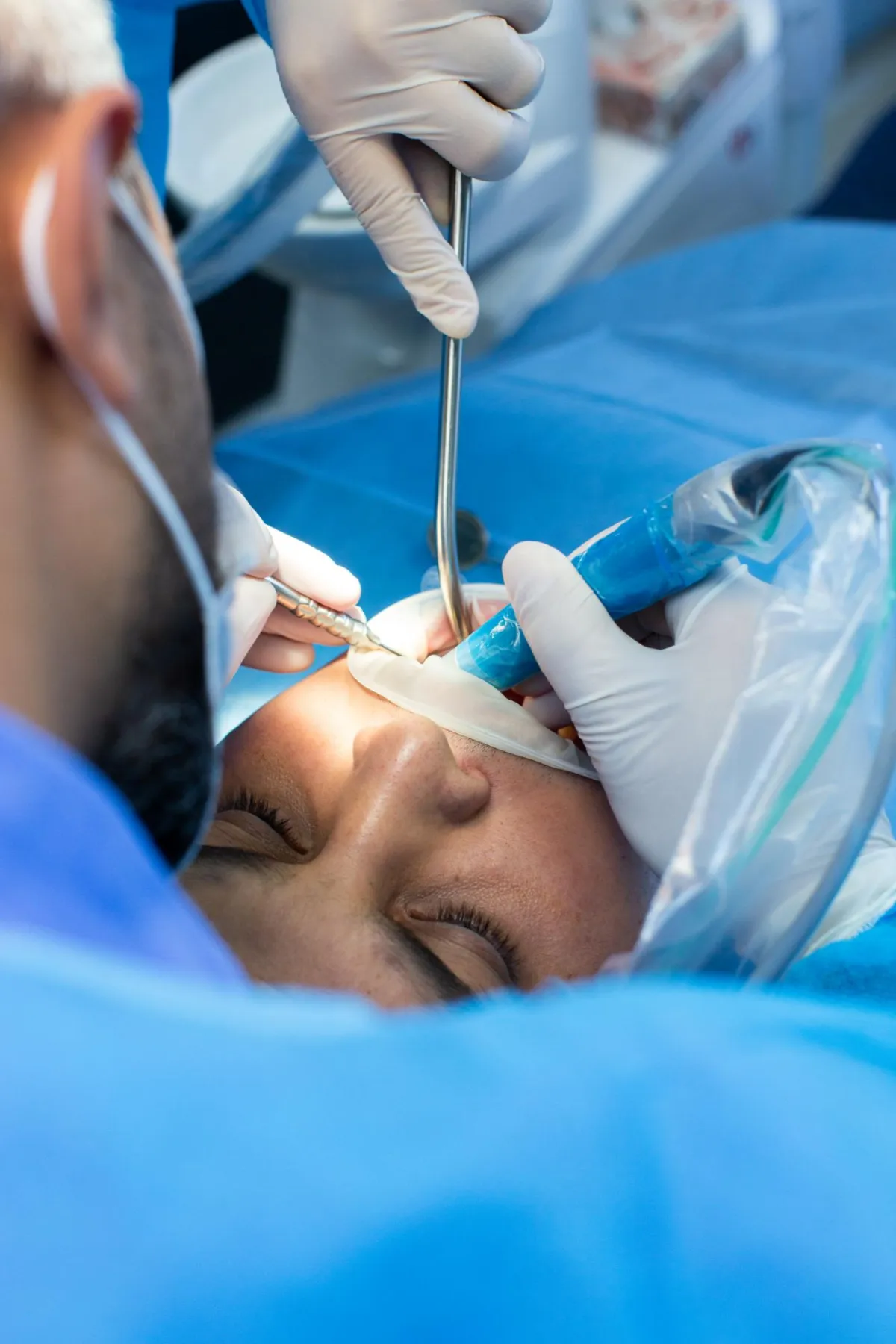
Replacing the missing tooth with an implant, bridge or another suitable option may help in selected cases, but only when the missing space is genuinely contributing to the problem.
There is also an overlap between function and appearance. Someone enquiring about Cosmetic Dentistry in kothamangalam may initially be concerned about crooked or uneven teeth, only for examination to show that those same tooth positions are contributing to cheek trauma. Cosmetic improvement and functional correction occasionally involve the same treatment, but they should not be treated as interchangeable goals.
Habitual Biting, Stress and Other Causes That Complicate the Picture
Not every cheek bite happens during a meal.
Some patients repeatedly draw the cheek between their teeth while concentrating, driving, working at a computer or dealing with stress. They may be completely unaware of the behaviour until a partner notices it or a dentist finds the characteristic roughened tissue.
Habitual cheek biting is sometimes described clinically as morsicatio buccarum. Repeated biting can produce a shaggy, thickened or whitish area rather than a single neat ulcer. Habitual oral mucosal biting has been documented as an unconscious behaviour that may be associated with emotional or psychological triggers.
Treating these patients orthodontically simply because the cheek is damaged can fail badly if the bite itself is satisfactory.
The habit has to be recognised.
A protective appliance may occasionally help break the cycle, particularly when biting occurs unconsciously or alongside clenching. Behavioural awareness matters as well. The useful question is often not merely, “When does it hurt?” but, “When do you catch yourself doing it?”
Night-time tongue injuries need a little more caution. A small occasional mark may come from clenching or jaw movement during sleep. Significant recurrent tongue biting during sleep, especially if accompanied by episodes of altered awareness, unusual movements or other neurological symptoms, should not be dismissed as an orthodontic problem.
Local anaesthetic causes another temporary problem. After dental treatment, a numb cheek or tongue cannot provide its normal positional feedback. Children are particularly prone to chewing numb soft tissue because it feels unusual. The result can look alarming several hours later. The solution there is not bite correction; it is preventing further biting while sensation returns and reviewing the area if swelling or injury becomes significant.
The same principle applies throughout: find out whether the teeth are causing the trauma or simply happening to be present while something else causes it.
What Proper Bite Correction Actually Involves
Good treatment starts with identifying the specific mechanical fault.
If one sharp filling is cutting the cheek, adjust the filling.
If a fractured tooth is responsible, restore it.
If a problematic wisdom tooth is repeatedly trapping the cheek and has a poor long-term prognosis, removal may be considered after examination and radiographic assessment.
If missing teeth have allowed significant drifting, restoring the space may form part of the plan.
When tooth position is the real problem, orthodontic treatment becomes more relevant. Braces remain appropriate for a wide range of complex movements. Clear aligners can also correct selected crowding and bite problems, provided the case is suitable and the trays are worn as prescribed.
SmileOn Denta Care lists orthodontic treatment, including clear aligners, among its services and states that its aligner treatment is used for crooked teeth, spacing, and uneven bites.
That makes Clear Aligners in Kothamangalam a reasonable option to discuss when recurrent biting is linked to tooth position, but aligners are not a universal solution. Severe skeletal discrepancies, difficult tooth movements, and cases where patient compliance is doubtful may require a different orthodontic approach.
The phrase "bite correction treatment" in Kothamangalam covers several very different interventions. It should not be interpreted as one particular procedure. In one patient it might mean orthodontic movement of several teeth. In another, correction of a high crown contact. In someone else, management of a missing tooth combined with orthodontics.
One common mistake is treating the wound while ignoring what keeps creating it.
Another is repeatedly chewing on the opposite side. That may give the ulcer temporary relief, but prolonged one-sided chewing can introduce its own problems and does nothing to correct the original contact.
During healing, softer foods may be more comfortable, and very spicy, acidic, or sharp foods can irritate an existing ulcer. Aggressive brushing directly over injured tissue does not speed healing. Antibiotics are not routine treatment for a simple traumatic bite.
If the same spot keeps reopening, that repetition is useful diagnostic information.
For patients considering bite correction treatment in Kothamangalam, the useful objective is not merely straighter-looking teeth. It is a bite in which teeth, cheeks, and tongue have adequate space to function without repeatedly colliding.
Frequently Asked Questions
1. Why Do I Keep Biting My Cheek or Tongue While Eating?
Eating quickly can occasionally cause it, but repeated biting suggests looking further. Swollen tissue from an earlier bite may be caught again, while crooked teeth, altered bite contacts, sharp restorations, or missing teeth can change the path of chewing. The location and frequency of the injury usually help narrow down the cause.
2. Can Crooked or Misaligned Teeth Cause Frequent Cheek Biting?
Yes. Rotated, crowded or incorrectly positioned teeth can reduce the space available for the cheek or tongue and create repeated trapping during jaw closure. Not every crooked tooth needs treatment, though. The relevant question is whether that particular tooth position is actually producing the trauma.
3. How Do Dentists Diagnose the Cause of Repeated Cheek or Tongue Biting?
The dentist examines the injured tissue, tooth position, fillings, crowns, missing teeth and bite contacts. Jaw movements are checked rather than examining only how the teeth meet when stationary. Digital scans, photographs or X-rays may be added when they are useful for diagnosis or treatment planning.
4. What Treatments Can Correct a Bite Problem?
Treatment depends entirely on the cause. Options can include adjusting an unsuitable restoration, repairing a damaged tooth, orthodontic treatment with braces or aligners, replacing missing teeth or managing a problematic wisdom tooth. Bite Correction Treatment in Kothamangalam should be selected after the source of trauma has been identified.
5. When Should Frequent Cheek or Tongue Biting Be Checked by a Dentist?
Arrange an examination when biting keeps occurring in the same place, causes repeated ulcers, affects eating, or follows a noticeable change in your bite. A persistent ulcer lasting more than three weeks should also be assessed rather than assumed to be caused by biting.
6. Can wisdom teeth cause cheek biting?
Yes. A wisdom tooth positioned towards the cheek, partly erupted or surrounded by limited space can sometimes catch the soft tissue. That does not automatically mean the tooth requires extraction. Its position, condition and relationship with neighbouring structures should be assessed first.
7. Can missing teeth affect the way I bite?
Yes. Teeth beside an empty space can tilt or drift, while the opposing tooth may move towards the gap. These changes can alter chewing contacts gradually and occasionally contribute to cheek or tongue trapping.
8. Can cheek biting cause mouth ulcers?
Yes. Repeated mechanical injury can break the surface of the oral mucosa and produce a painful traumatic ulcer. Removing the source usually allows healing. A sore area that does not behave like an ordinary healing injury deserves professional examination.
9. Are clear aligners suitable for correcting bite problems?
They can be, particularly for selected cases involving crowding, spacing or certain bite discrepancies. Suitability depends on the exact tooth movements required, the severity of the bite problem and whether the patient can wear the aligners consistently. Complex cases may be better managed with fixed braces or combined treatment.
10. Can a dentist tell if my bite is causing the problem?
Usually, yes. The pattern of tissue injury often corresponds with a particular tooth or contact. A dentist can examine how the teeth meet during normal closure and jaw movement, then compare those contacts with the location of the repeated cheek or tongue injury. Sometimes the cause is immediately obvious; sometimes several contributing factors are involved.

Find the way to your best smile


Kothamangalam Branch
Opposite Govt. Hospital, AM Road,
Kothamangalam Kerala 686691
Email [email protected]
Phone no: - 090748 49259
Assistance Hours
Mon–Sat: 9:30 AM–3 PM, 5:30 PM–9 PM
Sun: 9:30 AM–5 PM
Perumbavoor Branch
Near Ashirvad Theatre, KSRTC Road,
Perumbavoor
Email [email protected]
Phone no: - 7025099259, 9074849259
Assistance Hours
Mon–Sat: 9:30 AM – 8:00 PM
Sun: 10:00 AM – 5:00 PM
© 2026 SmileOn Denta Care. All rights reserved. Powered By